Published
Feb 23, 2026
Author
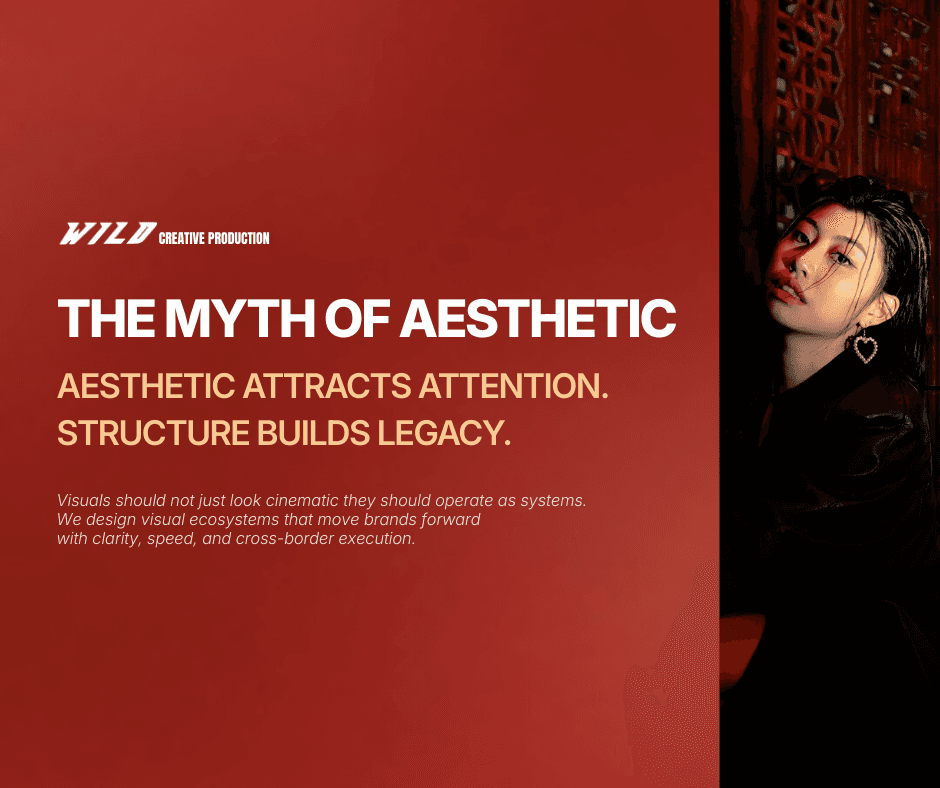
The Myth of Aesthetic Without Structure
The Myth of Aesthetic Without Structure
In contemporary brand culture, aesthetic has become currency. A refined color palette, a cinematic reel, a carefully curated feed—these elements create immediate impact. They signal taste, sensitivity, and cultural awareness. In an attention-driven environment, beauty travels fast.
Yet aesthetic alone rarely sustains value.
Many brands invest heavily in surface execution. They commission high-end shoots, produce visually impressive short films, and maintain stylistic consistency at a glance. However, beneath the surface, the structure is missing. Messaging shifts from post to post. Tone fluctuates between campaigns. Content exists as isolated moments rather than parts of a coherent system.
This is the myth: that aesthetic is enough.
Without structure, aesthetic becomes decoration. It may attract attention, but it cannot accumulate meaning. It may impress once, but it struggles to create recognition over time. Recognition is not built by individual visuals; it is built by patterns.
Structure defines those patterns.
Structure aligns narrative direction, clarifies positioning, and establishes rules for how a brand speaks and appears across contexts. It connects campaign films to social clips, product launches to long-term storytelling, and creative direction to measurable performance. It turns visual decisions into strategic ones.
When aesthetic is supported by structure, beauty becomes functional. It reinforces brand memory. It reduces internal confusion. It allows teams to produce faster without compromising coherence. It enables scale.
Without structure, aesthetic demands constant reinvention. Each new project must outperform the previous one because there is no underlying framework to carry continuity. Over time, this leads to fatigue—creative fatigue, operational fatigue, and strategic drift.
Structure does not restrict creativity. It protects it. It provides boundaries within which exploration becomes meaningful rather than random. It ensures that each new visual adds to the system instead of replacing it.
Brands that endure are rarely the most visually experimental at any given moment. They are the most structurally disciplined. Their aesthetic evolves, but their foundation remains stable.
The future of visual branding will not belong to those who can produce the most beautiful images. It will belong to those who can design the systems that make beauty sustainable.
Aesthetic attracts attention.
Structure builds legacy.
In contemporary brand culture, aesthetic has become currency. A refined color palette, a cinematic reel, a carefully curated feed—these elements create immediate impact. They signal taste, sensitivity, and cultural awareness. In an attention-driven environment, beauty travels fast.
Yet aesthetic alone rarely sustains value.
Many brands invest heavily in surface execution. They commission high-end shoots, produce visually impressive short films, and maintain stylistic consistency at a glance. However, beneath the surface, the structure is missing. Messaging shifts from post to post. Tone fluctuates between campaigns. Content exists as isolated moments rather than parts of a coherent system.
This is the myth: that aesthetic is enough.
Without structure, aesthetic becomes decoration. It may attract attention, but it cannot accumulate meaning. It may impress once, but it struggles to create recognition over time. Recognition is not built by individual visuals; it is built by patterns.
Structure defines those patterns.
Structure aligns narrative direction, clarifies positioning, and establishes rules for how a brand speaks and appears across contexts. It connects campaign films to social clips, product launches to long-term storytelling, and creative direction to measurable performance. It turns visual decisions into strategic ones.
When aesthetic is supported by structure, beauty becomes functional. It reinforces brand memory. It reduces internal confusion. It allows teams to produce faster without compromising coherence. It enables scale.
Without structure, aesthetic demands constant reinvention. Each new project must outperform the previous one because there is no underlying framework to carry continuity. Over time, this leads to fatigue—creative fatigue, operational fatigue, and strategic drift.
Structure does not restrict creativity. It protects it. It provides boundaries within which exploration becomes meaningful rather than random. It ensures that each new visual adds to the system instead of replacing it.
Brands that endure are rarely the most visually experimental at any given moment. They are the most structurally disciplined. Their aesthetic evolves, but their foundation remains stable.
The future of visual branding will not belong to those who can produce the most beautiful images. It will belong to those who can design the systems that make beauty sustainable.
Aesthetic attracts attention.
Structure builds legacy.
Next Blog
Next Blog